
💰 Personal Finance
Managing my personal finances has been one of my primary focuses in recent years, from basic saving strategies to passive investing and growing my wealth. I’ve made numerous mistakes in the past, but since then, I have spent an extensive amount of time learning about managing money and how best to prepare ourselves so that we are always in control of our finances instead of being handcuffed by them.
The purpose of this page is to share useful tips and insights that I put into practice myself or have learned from books, online and podcasts, as well as document my mistakes and how I’ve grown from them.
📚 MY FAVORITE BEGINNER BOOKS
I Will Teach You to Be Rich - Ramit Sethi
Rich Dad, Poor Dad - Robert Kiyosaki
The Simple Path to Wealth - JL Collins
ALL POSTS


Yotta Savings plays on the psychological enjoyment and rush that lure so many Americans to spend on the lottery and applies that “theme” to its savings account platform by holding weekly drawings for its depositors to have a chance to win up to $10,000,000 each week.

Car insurance is my 2nd largest monthly, fixed expense. The only larger monthly expense is my rent. As you can expect, I was highly motivated to reduce my car insurance payments, mostly because I wasn’t fully benefiting from it with my car left in the garage, but also because I find it ridiculously expensive in the first place.

With so much uncertainty in the economy right now, I’ve been focused on building my cash. But instead of just sitting there like a bench warmer, I’d like to have the money work for me a bit.
Despite offering higher interest rates, I’ve always shied away from regular CD’s because they required leaving my money in the bank for a fixed period of time (and penalized me if I withdrew my money earlier than the agreed term). I mean how can I predict today if I won’t need that Le Creuset signature dutch oven within the next 2 months??
And then I discovered the no-penalty CD.

The Federal Reserve impacts the lives of US citizens every day. It’s considered the most important and powerful financial institution of the United States.
Particularly in response to recent times, the Federal Reserve has made the news for “cutting rates”, “buying billions worth of government bonds” and being tied to the rising trend of money printing memes.
These news impact your life (well maybe not the memes), so it’s always good to have a basic knowledge of what the Federal Reserve does and how it affects your wallet.

We are constantly under financial attack by financial emergencies that are authentically and genuinely unexpected.
There’s minor emergencies, like a nail in the tire, and major emergencies, like a trip to the emergency room. All of these are attacks on your money.
Building your financial fortress is crucial to defending yourself from these attacks.

I hope all of you and your families are staying safe these days. No doubt these are some weird and unprecedented times.
Everyone’s quarantined at home, stores are closed, schools are shut down and events are cancelled. Freeways are empty and any on-going activities have essentially been put on hold. It’s like the world has hit the pause button on life in 2020. After all this is over, it’ll feel as if we finished 2019 and skipped right over to 2021.
So what can we do during this period?

A stock is a type of investment. When you purchase stock in a company, that means you are buying a small portion of that company. In other words, you own shares of the company. And as a result, you are considered a shareholder of this company.
Companies will sell shares to raise money to operate their business. This money can be used for a variety of reasons, including funding growth and expansion or paying off debt.
2020 has been off to a whirlwind of a start for the world.
The coronavirus outbreak has shaken many people’s lives, and is playing a huge role in the turbulence that we are seeing in the markets these days. As the world scrambles to contain the severity of this black swan event, the current and future impacts have yet to be measured. To what extent it will affect the markets remains to be seen.

If you’ve ever attempted at adulting, you may have taken a crack at reducing your expenses and improving your monthly savings. Some of you may have been successful at it, while some of you may feel like you can never manage to save much.
🙋♀️ I'll be the first to admit that I’ve tried to improve my monthly savings numerous of times throughout the years with barely any success.

For many years, I didn’t know what CD’s at banks stood for or what they were used for.
Like many of you, the only types of “CD’s” that I knew of either contained my PC games or were used to blast music to drown out my teenage angst.
But as much as I’d like to reminisce over the early 2000’s, instead, the type of CD’s we’ll go over today can help you make more money off of the money that you already have and plan to have sitting at the bank.

Can you believe that we’re already done with the first month of this new decade? Time 🥔fries🥔 when everyone is busy with the near year after the holiday break!
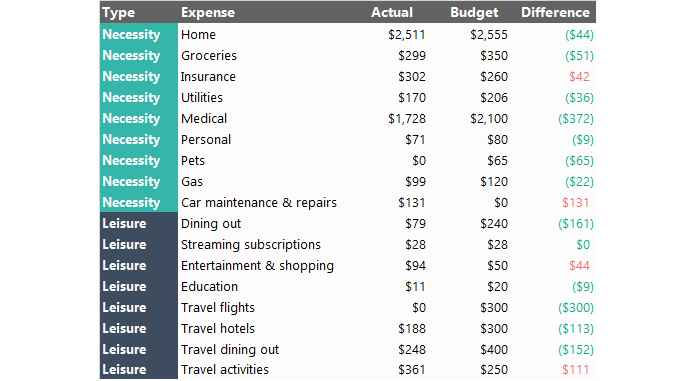
Two of my 2020 goals this year are to track my net worth and increase my savings rate. In order to accomplish both, I need to track my monthly expenses to make sure that I’m on the right track.
To start the year off, I decided I’d review my January 2020 expenses on how I did this month and areas where I can see room for improvement. I won’t be posting these monthly, but I’ll continue tracking them on my own.

A few weeks ago, my doctor told me that I would need to quit drinking coffee.
This was not news that I had ever expected to hear, since coffee is such a commonly consumed beverage and, more importantly, it had become a crucial part of my daily routine. For those of you who need your kick of morning coffee, you probably understand the pain without it.

Have you ever logged into your bank account to find purchases that you didn’t remember making? Any store transactions where you don’t recall authorizing or recognize at all?
A few years ago, that exact situation happened to me. I mean, don’t get me wrong, there were times where I shopped at so-and-so store and totally forgot about it 😅… but we’re not here to talk about those today. These are the types of purchases under your name, but not made by you. The type called identity theft, or credit card fraud.

Up until last year, I was embarrassingly naive when it came to personal finance and money management. And when I say embarrassing, I mean I had been working in finance for 5 years and spent more time in Excel than with my friends. Yet when it came to my income and expenses, I just couldn’t get a good grasp of it.

We’ve all heard the the spiel, “The best time to start investing is today”, “You need need to start investing when you’re young”, “Compounding is a powerful force”, or “Let your money work for you”. But what does this all mean? What is so powerful about compounding interest?

Yuck.
We know… we know, we know, we know… “Budgeting” … ugh.
That one thing that we all know about (at least sorta) but just hate to deal with or face it. It feels so constraining or suffocating or just overwhelming altogether.
Like you’re setting yourself up to be benchmarked against expectations that already feel challenging to meet. No one likes to experience the feeling of failure - let alone voluntarily signing yourself up for it.

Don’t judge a book by its cover.
You can’t always measure a person’s financial success or wealth based on what they buy, wear or carry around.
Just because someone purchases all the new swaggy things - nice car, brand name clothes, jewelry, big house… doesn’t mean that they are financially sound. We all know the phrase “Instagram vs reality”. That’s a real thing here. Well, in this case, it would be “appearances vs net worth”. AKA that guy who’s always stuntin his Ferragamo belt and Gucci sandals might actually have a smaller net worth than you with your allbirds.

New year, new me!!! - said everyone ever 🙃 … But no really, this is the year. This is THE year. My whole life has waited for this moment - or maybe I’m just finally mentally ready (or ever-so-slightly matured) to start taking better control of my finances. I admit that most of my life (aka my entire life) I was never the most fiscally responsible. I wasn’t proud of my spending habits and was intimidated by all the personal finance jargon, like “401k”, “investments”, etc. As a result, being an ignorant potato was bliss.
